


The world's oldest accessory is back in fashion
The brooch is currently making a comeback. No wonder, after all, it creates an elegant focal point that transforms and elevates both classic basics and fashionable trend pieces into real eye-catchers. It can be simply and classically attached to the lapel of a jacket, the shirt collar of a blouse, or the neckline of a sweater or dress. It looks even more fashionable on a sleeve, a hat, or a bag. It is also very practical for securing a stole, cape, or neck scarf.
The history of the brooch, derived from the French «broche», which means something like «brooch pin», dates back to the Bronze Age. In ancient Greece, among the Romans and in Byzantium, the «brooch pin» also had a dual function. Since there were neither buttons nor zippers at that time, it was used not only as a piece of jewelry, but primarily as a «garment fastener». The decisive factor for its further development and purpose were above all the multicolored enameled, disc-shaped brooch pins that were made in Byzantium, the former Eastern Roman Empire. Thus, over time, impressive pieces of jewelry were created from fine materials such as gold, silver, bronze, and sparkling gemstones. When buttons then made their triumphant march in the 19th century, creating a new way to hold or fasten clothing together, the brooch lost its practical value and transformed into a purely decorative object. The royal houses and noble families paved the way for this new trend. In the 17th century, brooches with decorative elements such as bows and flowers became very fashionable. So too the famous Belle Époque bow brooch of the French noblewoman Mme de Sévigné (1626-1696). This is still highly relevant today and is part of the inventory of many exclusive jewelers. In the 18th century, brooch pins set with diamonds and pearls, often with miniatures, reliefs, and portraits in enamel, were in fashion. Later, brooches were threaded onto ribbons or chains to be worn as necklaces. But the brooch served not only for decoration, but also to indicate belonging to a family or a noble house. Until the 19th century, it stood as an expression of wealth. Thus, it was an integral part of the clothing at royal houses and princely courts and represented a wealthy society that was rooted in tradition and conservative thinking. In the 1960s, brooches adorned classic everyday business outfits, such as suits. Then, however, they disappeared into Grandma's jewelry box.
It was only America's former Secretary of State Madeleine Albright who gave the brooch a completely new meaning during her tenure (1997-2001). She never entered the political stage without one, often using it as a deliberate political statement. According to her own statements, on good days she chose motifs such as flowers, butterflies, or balloons. During difficult negotiations, however, she preferred beetles or carnivorous animals. In England too, great care is taken as to which brooch the ladies of the royal house or the political establishment adorn themselves with at their appearances. Certain symbols and colors of these brooch pins are explicitly used to convey social messages, so to speak, «by the way of a hint». So it is no wonder that it was precisely the young royal pop stars of England who have brought the brooch back into the focus of the fashion world.
Today, the brooch has found its place in the great fashion houses and runways of this world and is more versatile and adaptable than ever – mind you, as a valuable accessory and not as cheap trinkets. And so, in the 2020s, it is now naturally part of the collections of the major designer labels.
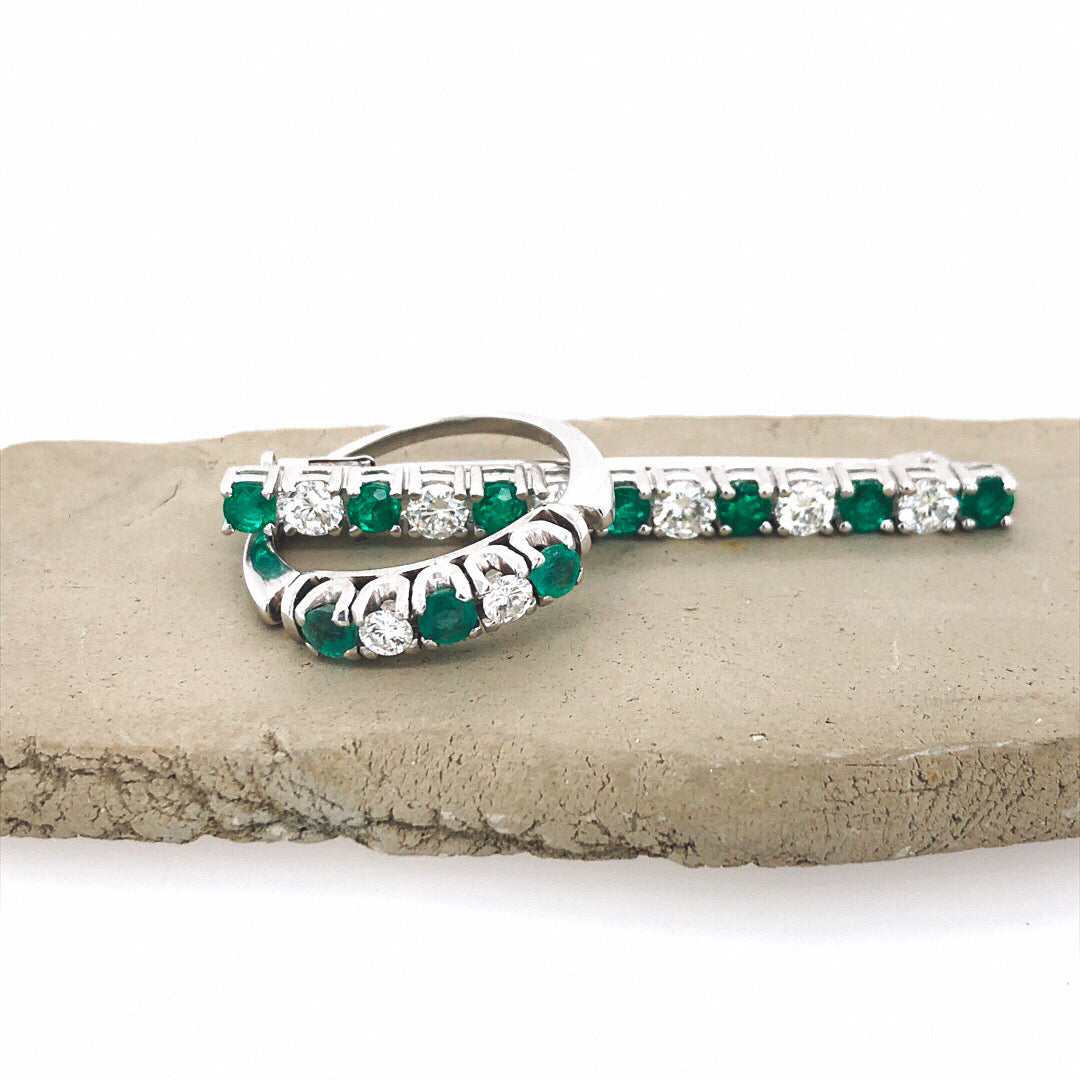
At PreJou you will find vintage brooches that tell a story. Unique pieces of jewelry that can no longer be found on the market and with which you can emphasize your individuality.
Browse through our selection of second-hand brooches here, which we are constantly expanding for you.



Leave a comment (all fields required)